Which large model fits your laptop?

Check the verified RAM, disk and operating-system paths for native C Qwen3.8-27B and DeepSeek-V4-Flash-0731 CPU inference.

Windows environment

Qwen3.8-27B

Checking
  • Minimum tested: 8 GB RAM, about 10 GB free disk
  • Higher-quality path: 20 GB available memory, about 17 GB disk
  • Reference speed: up to 2.52 token/s on a 32 GB x86 laptop
  • Use it: terminal chat or resident local OpenAI-compatible API
  • Runtime: native C, direct GGUF, no GPU or Python

DeepSeek-V4-Flash-0731

Checking
  • Minimum tested: 8 GB RAM, about 172 GB free disk
  • Checkpoint: native 284B-A13B, streamed from SSD
  • Reference speed: ordinary 0.59 token/s; best prompt lookup 1.12 token/s
  • Use it: terminal chat or resident local OpenAI-compatible API
  • Runtime: pure C, no GPU, Python or weight conversion

Real output from the published engines

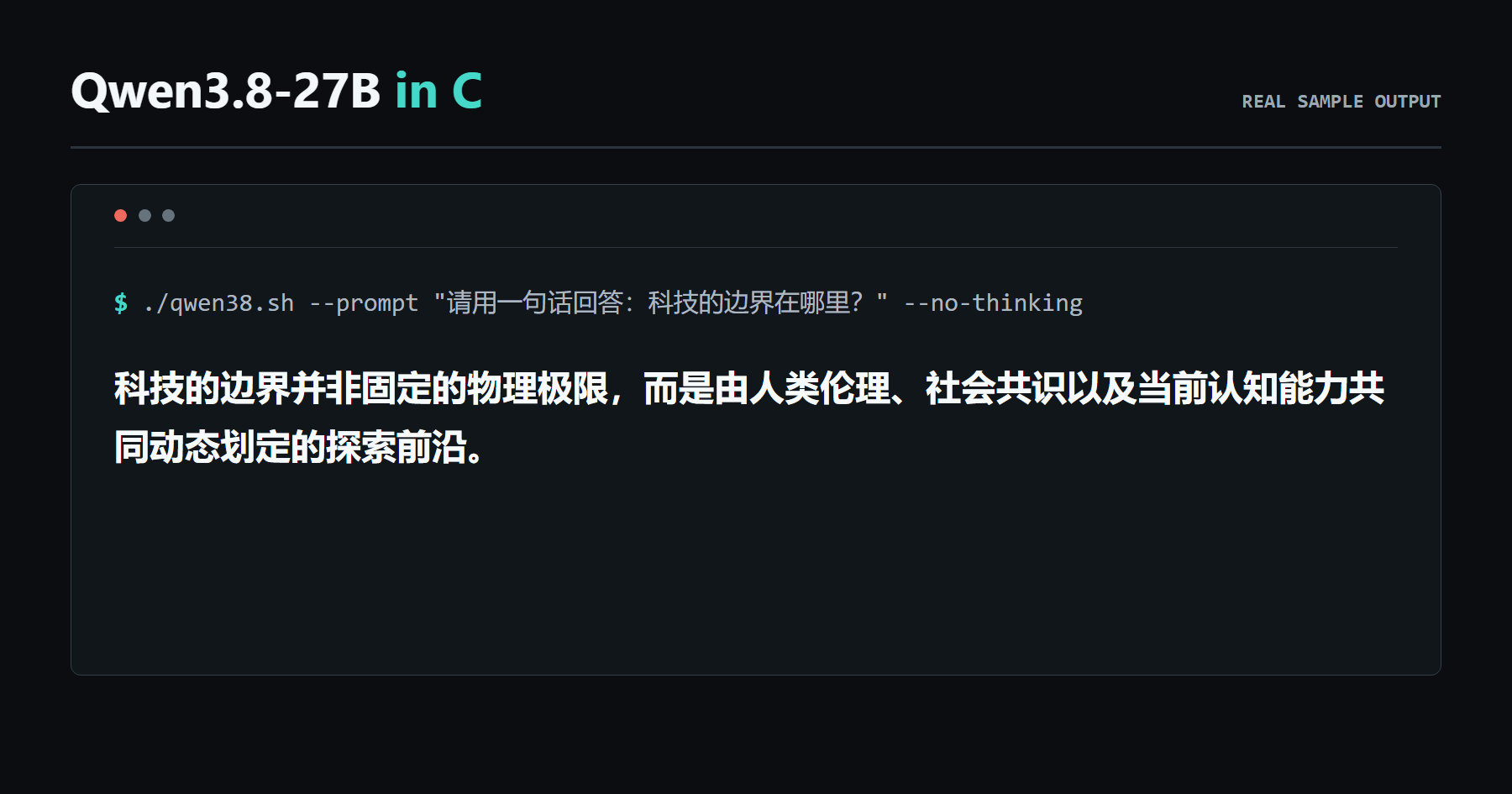
Qwen3.8-27B real sample output
Qwen3.8-27B, native C, laptop CPU.
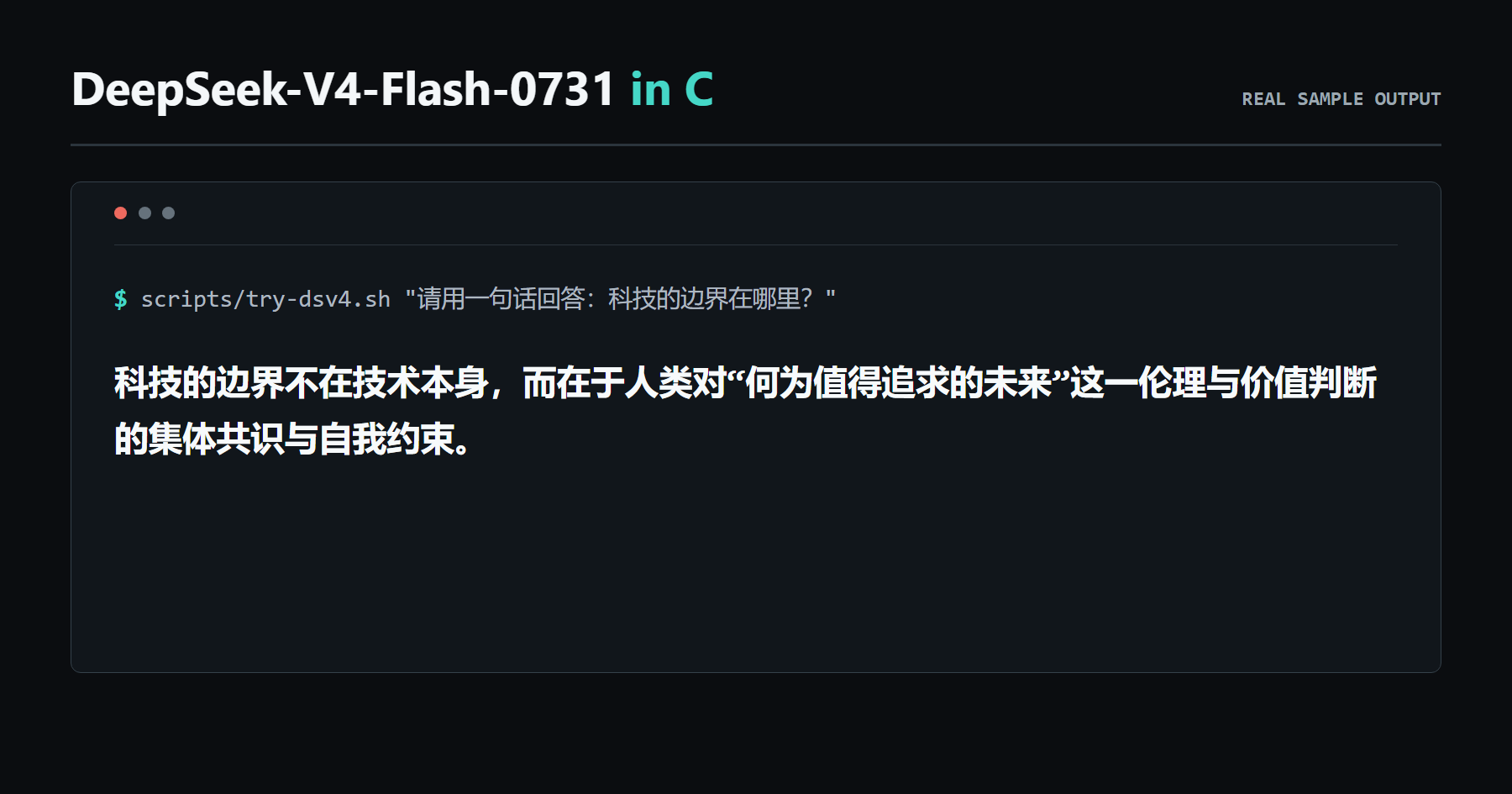
DeepSeek-V4-Flash-0731 real sample output
DeepSeek-V4-Flash-0731, pure C, laptop CPU.

Questions before downloading / 下载前常见问题

Can an 8 GB laptop run these models? / 8 GB 笔记本真的能运行吗?

Both projects completed real inference under an 8 GB minimum tested path. Qwen uses a 6.27 GiB IQ1_M GGUF; DeepSeek streams cold experts from the native checkpoint on SSD. More memory can improve quality or caching.

Does the 8 GB path preserve original model precision? / 低内存方案会损失精度吗?

Qwen IQ1_M is a lossy quantization of the original checkpoint, while its runtime speedups add no further approximation for the same GGUF. DeepSeek reads the released native FP8/FP4 checkpoint without weight conversion.

Why does DeepSeek need 172 GB disk but only 8 GB RAM? / 为什么磁盘很大、内存却可以很小?

The complete 284B-A13B checkpoint stays on disk. The engine keeps a bounded RAM cache and streams cold MoE expert weights from SSD only when routing needs them.

Can I run this on Windows? / Windows 可以运行吗?

Yes, through WSL2. Linux and macOS provide the required POSIX interfaces directly.